Artificial Intelligence for Everything
Artificial Intelligence (AI) is a field of computer science that aims to create intelligent machines that can work and think like humans. It has become a buzzword in recent years and has been applied to a wide range of fields, including healthcare, finance, education, and many more. In this blog, we will explore what artificial intelligence is, its various applications, and its future potential.
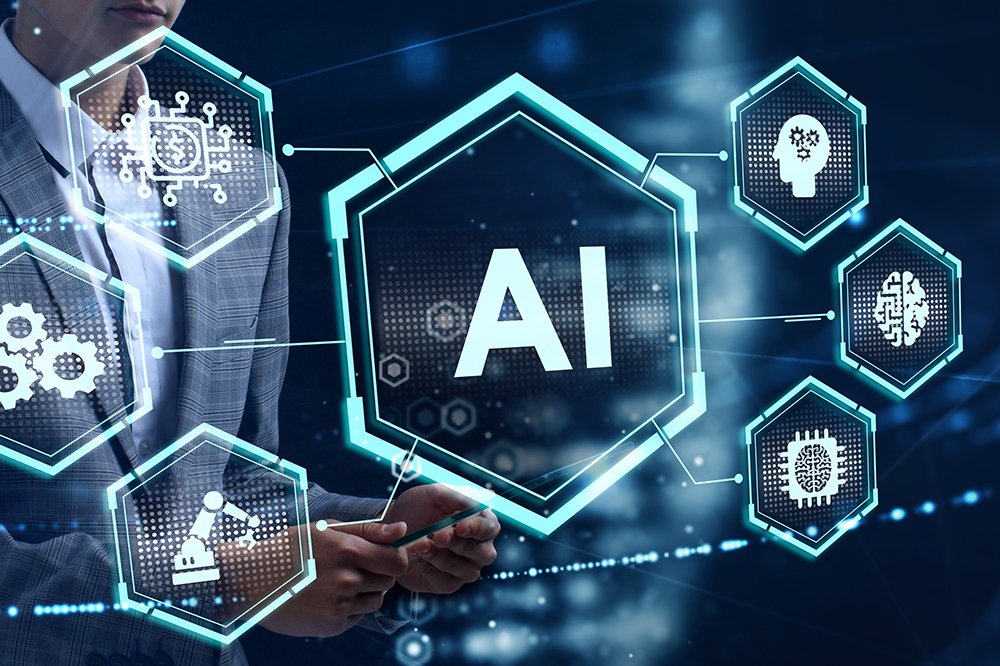
What is Artificial Intelligence?
Artificial Intelligence refers to the development of machines that can think, learn, and make decisions like humans. It involves creating computer programs and algorithms that can mimic human cognitive processes, such as perception, reasoning, and problem-solving. AI is achieved by combining various technologies, including machine learning, natural language processing, robotics, and computer vision.

Types of Artificial Intelligence
There are two types of AI – narrow or weak AI and general or strong AI. Narrow AI is designed to perform a specific task, such as playing chess or recommending products to customers. It is programmed to learn from a dataset and make decisions based on that data. General AI, on the other hand, is designed to perform any intellectual task that a human can do. It can reason, learn, understand natural language, and think abstractly. However, true general AI is still a work in progress and has not yet been achieved.
Applications of Artificial Intelligence
AI is being used in a wide range of fields and industries, including healthcare, finance, education, and transportation, to name a few. Here are some examples of AI applications:
- Healthcare: AI is being used in healthcare to improve patient outcomes, speed up diagnosis, and reduce healthcare costs. Machine learning algorithms are being used to analyze medical images, such as CT scans and X-rays, to identify abnormalities and assist with diagnosis.
- Finance: AI is being used in finance to detect fraud, automate trading, and improve customer service. Machine learning algorithms are being used to analyze financial data and make predictions about market trends.
- Education: AI is being used in education to personalize learning, provide feedback to students, and assess their progress. Adaptive learning platforms use machine learning algorithms to analyze a student’s learning behavior and provide personalized recommendations.
- Transportation: AI is being used in transportation to improve safety, efficiency, and reduce carbon emissions. Self-driving cars are being developed using computer vision and machine learning algorithms to detect and avoid obstacles.
Future Potential of Artificial Intelligence
The potential of AI is immense, and it is expected to have a significant impact on our lives in the future. Here are some potential future applications of AI:
- Personalized Medicine: AI can be used to develop personalized treatment plans for patients based on their genetic makeup, medical history, and lifestyle factors.
- Space Exploration: AI can be used to explore the universe by analyzing vast amounts of data collected by space probes and telescopes.
- Climate Change: AI can be used to monitor the earth’s climate and predict the effects of climate change.
- Cybersecurity: AI can be used to detect and prevent cyber attacks by analyzing network traffic and identifying suspicious behavior.
Conclusion
Artificial intelligence is a rapidly growing field with a wide range of applications in various industries. It has the potential to revolutionize the way we live and work, and its impact is only expected to grow in the coming years. As AI continues to develop and become more advanced, it will be interesting to see how it will be applied to new areas and the impact it will have on society.
 Tech News
Leave a comment